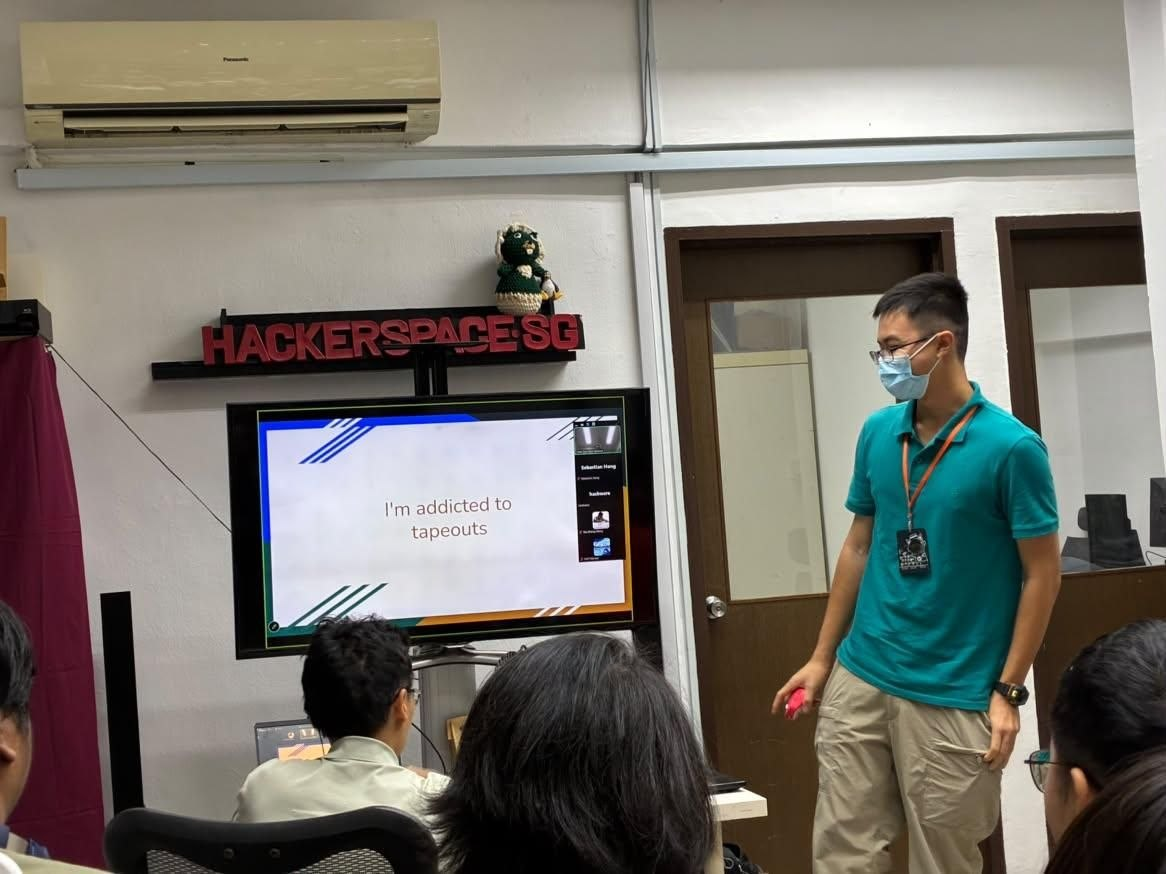
TinyTapeouts Hackware 2026/10 presentation
TLDR: I taped out my Advent of FPGA solution and a ring oscillator with xschem.
Advent of FPGA Submission
https://docs.google.com/presentation/d/1NpWGY3AxLYl-RwEu0x4G52JkbFERUa99b7fZzpX8l1k/edit?slide=id.p#slide=id.p
Tapeout Hackware Oct Presentation
https://docs.google.com/presentation/d/1q47hgGql9yV65cSjM8kwuDtjU8DYk9GEuHhXGwoSI3w/edit
I linked some other technical notes here for reference
How to do Simulations
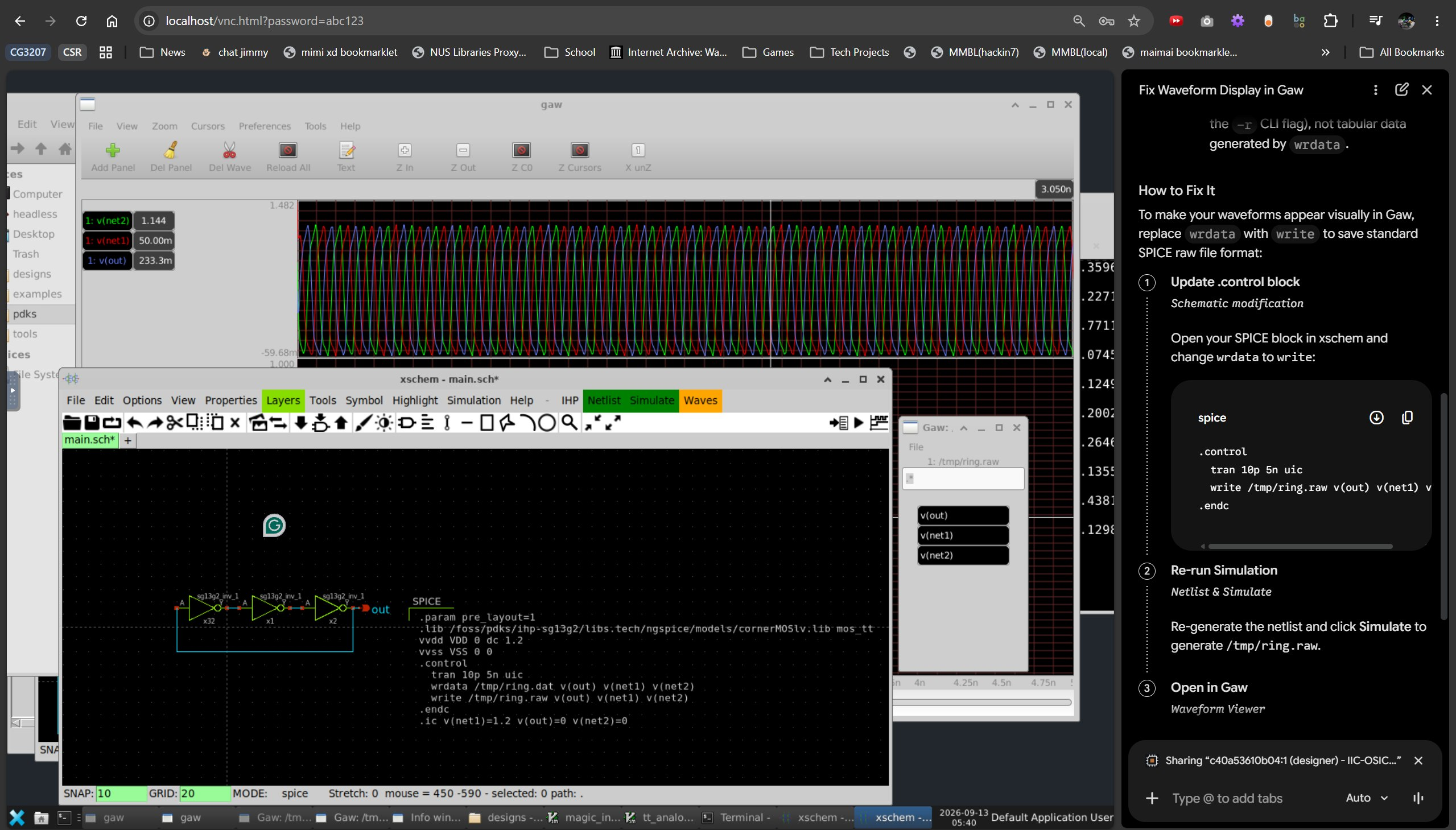

How to do SPICE Simulations in xschem
- Draw the Circuit AND add in the code block for the spice commands
- most important is write command to a raw file with the related nets
- make sure the circuit is not a subcircuit
- Generate Netlist, then Simulate
- Open Graph > External > File > Select the raw file
or clank it out ngl, it can be clanked with big pickle
Mixed Signal
So mixed signal experimentations
- Digital Verilog -> Yosys -> Openlane
- Xschem -> Magic -> gds/lef -> Openlane
- Combined into 1 final generated GDS, but apparently its possible to hand configure positions of the blocks in openlane config
Notes
4. Opencode Big Pickle SUCKS - Cursor Grok is better, Codex burst 5h without doing anything
- Grok does quite well for direct mag file manipulation (modify layout)
- not so well at magic commands
- clanked out the positioning
- used about 20% cursor pro grok/composer credits
5. OpenLane Black Boxes NEED to have VPWR and VGND exposed on TopMetal1
- was a huge pain in the ass ngl